
The last post I made was about our passage to Niue from French Polynesia. I mentioned that choosing Niue as our next port was a good decision, so I want to record some of the highlights of our visit.
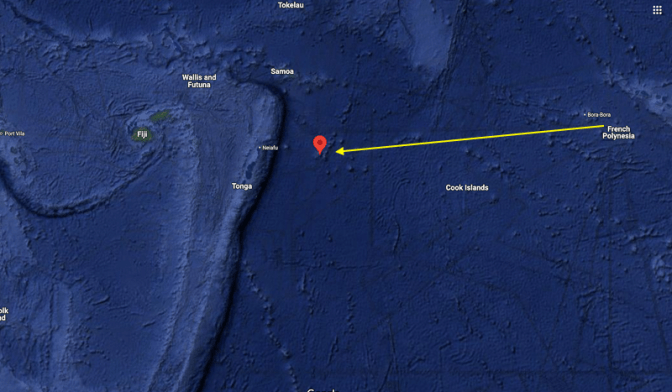
Niue is the western most island of the Cook Islands, but it is not part of the government of the Cook Islands. Niue is a self-governing state in free association with New Zealand. Niueans are New Zealand citizens and members of that Commonwealth. According to Encyclopedia Britannica, “New Zealand is responsible for defense and external affairs as well as administrative and economic assistance as necessary.”
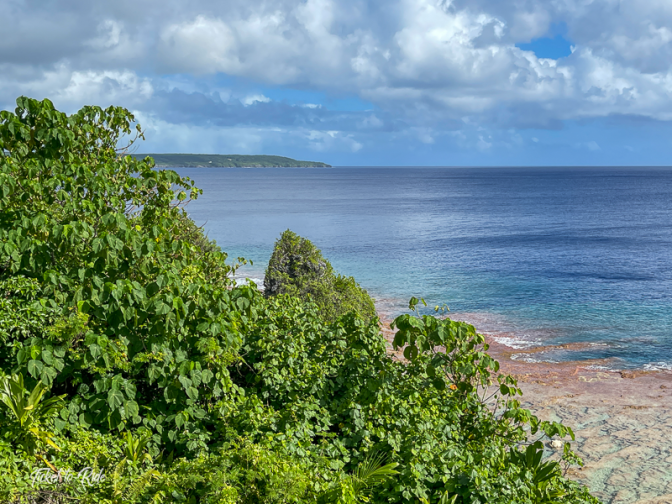
Sometimes called “The Rock,” Niue is one of the smallest nations in existence however it is one of the largest raised coral atolls in the world. But don’t be fooled, the circumference of Niue is about 40 miles, so it isn’t large. And it is pretty wild to think we intentionally sailed to a country that is so small in the middle of the Pacific Ocean!
As of 2017, the population of Niue was approximately 1700 people and sadly it is declining as people move to New Zealand to pursue more economic opportunities. We found the citizens of Niue to be very welcoming, always saying “fakalofa atu” (hello) when they passed us.
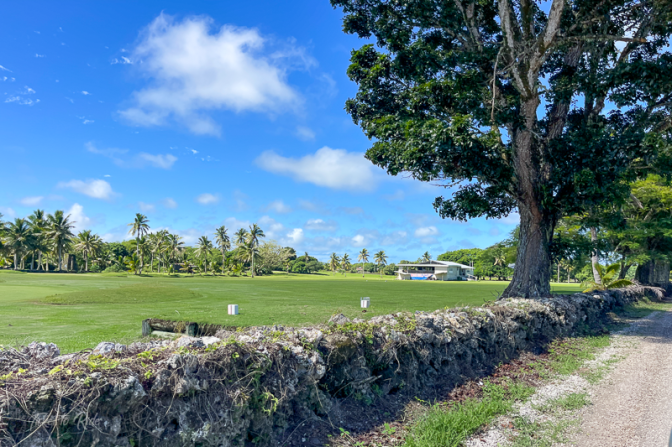
Geographically, Niue is made of two levels, the raised central plateau which is 200 feet above sea level at the highest point and the outer edges which slope down to the ocean. There is a fringing reef around Niue made of porous limestone that is eroded by the sea and forms caves and ocean pools. These fringing reefs have a ton of variety and we had a great time exploring them. The Niue guidebook lists 29 sites to visit along the coastline.
Of all the places we have visited, Niue had the most unique dinghy landing of all. The access to land was via the quay where large ships dock and the ocean swell was constant. Dinghies could not be left tied up but instead had to be hoisted out of the water using a davit. Every time we went ashore, we had to lift Day Tripper out of the water and leave it in the parking lot.
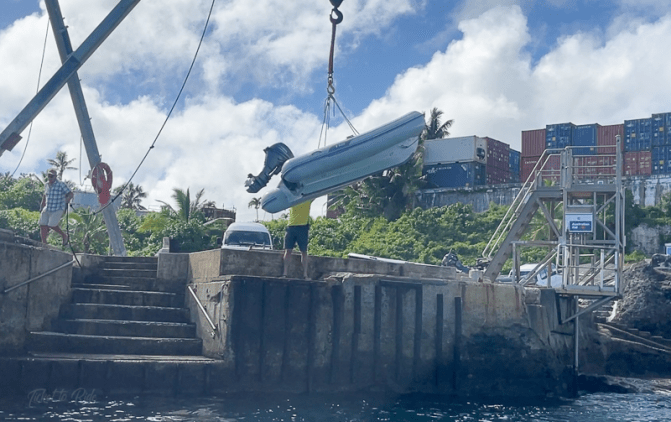
The first time we used the davit was a little scary, considering we were lifting our “car” out of the water and we certainly didn’t want it to turn over in mid air or somehow slip out of the lifting system and get damaged. Frank created an excellent lifting bridle that easily attached to the davit and Day Tripper hoisted well balanced and level to the water.
The first day we went ashore to secure our visiting papers, Keith, our contact prior to arriving in Niue, gave us a quick tour around the main town of Alofi.
One of our first surprises was seeing and learning about the local jail on Niue. It is located just a few yards off the road and is visible from the grocery store.
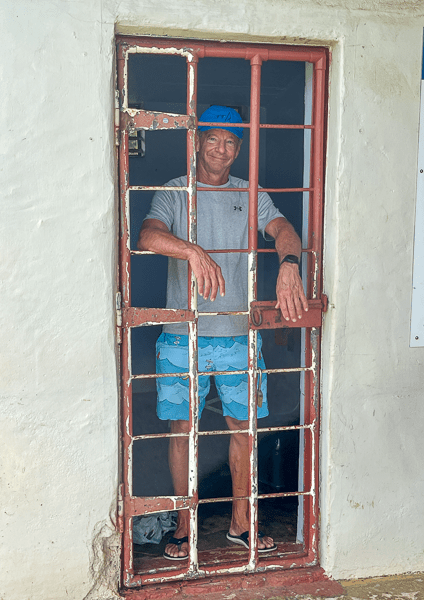
Keith told us that whoever is “incarcerated” is put in one of 3 cells. None of the cell doors have locks on them and if the “inmate” needs the restroom, he (or she) opens the door, walks to the nearby bathroom, then returns to his cell. Honor system among criminals! How great is that?
While in town with Keith, we met a few other cruisers and were invited to join them for dinner at a local restaurant. One of the great things about cruising is how easy it is to meet other sailors. Also, it was amazingly easy to order since the menu was in English!
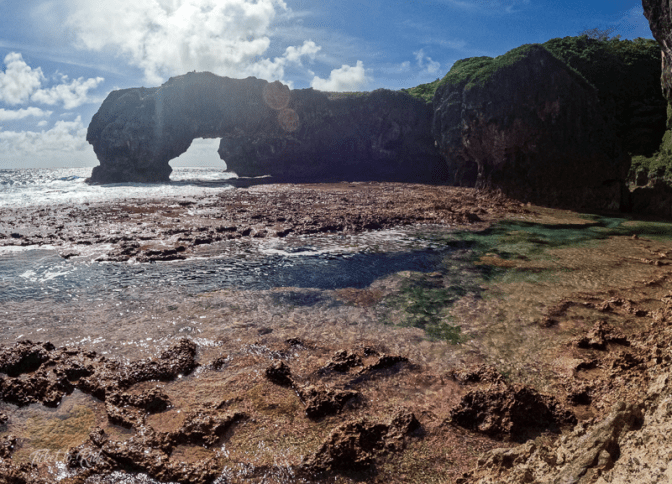
Talava Arches was one of our first excursions and it was nothing short of stunning. After walking through lush foliage, the path opened up to the ocean and an expanse that revealed the arches. The water was so clear we had to take a quick swim!
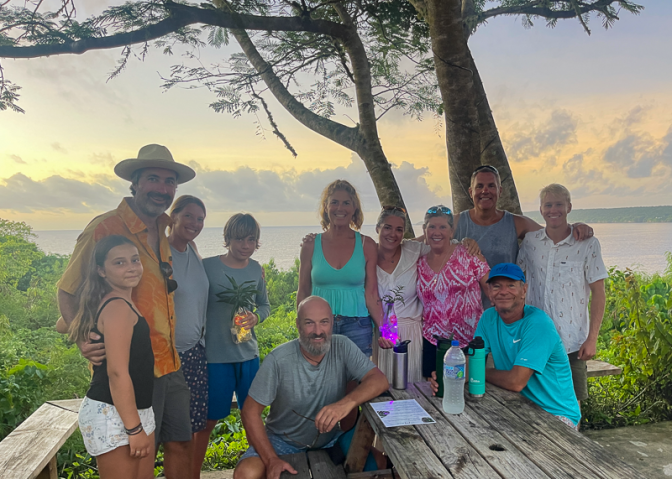
Garrett, a young, single-hander sailor, joined us on the outing to the arches and on a cave dive to see the famed sea snakes of Niue.
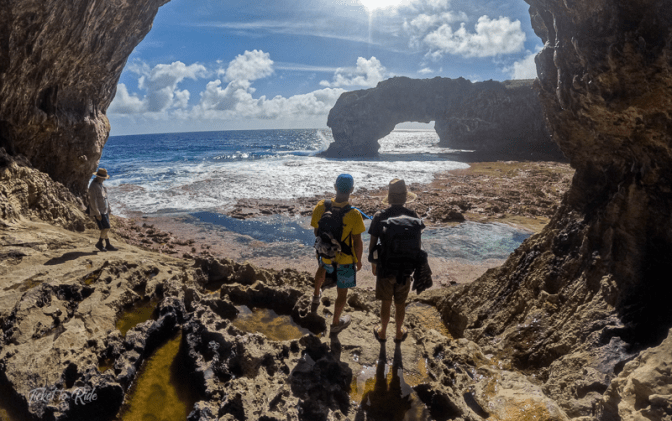
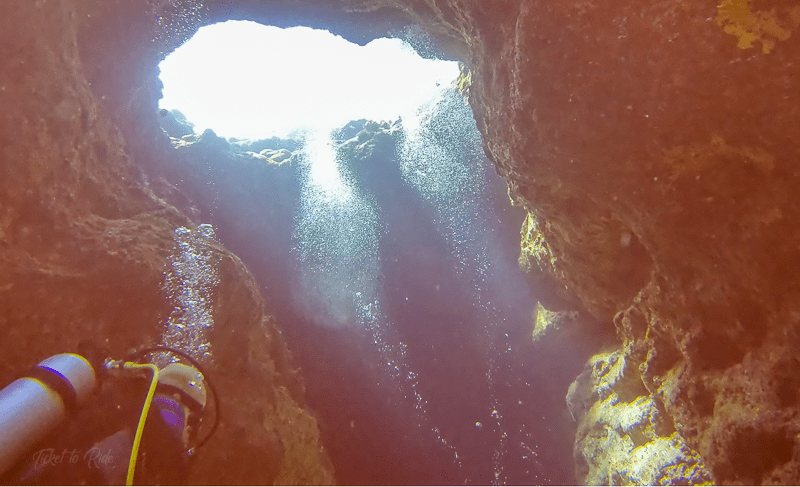
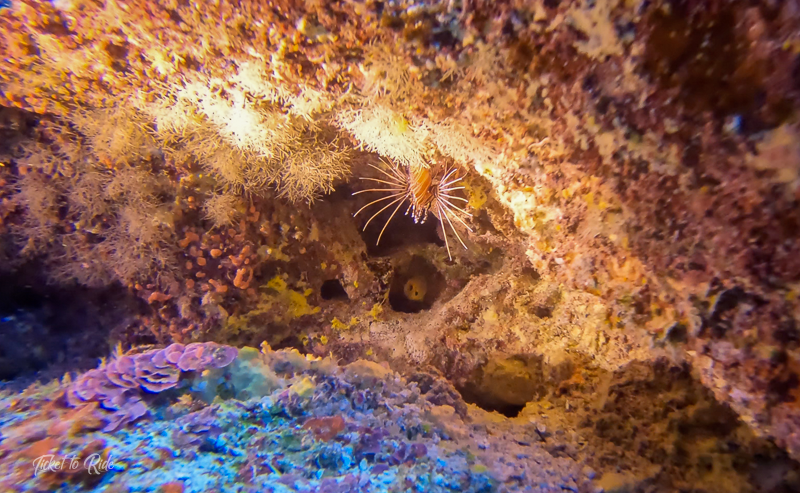
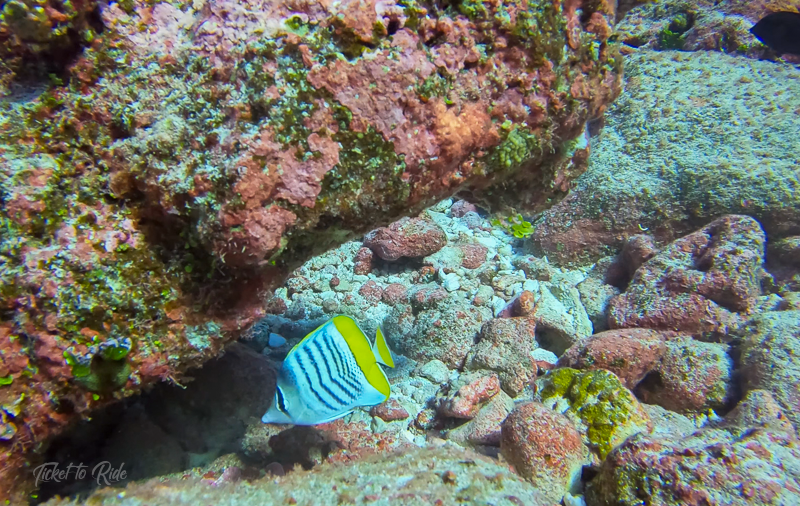
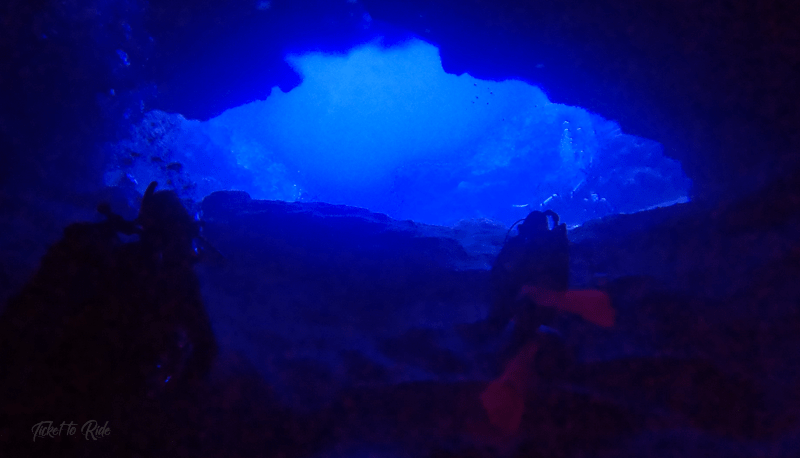
The Katuali, sea snakes, are known to be in caves, and we joined a dive company for the dive so we wouldn’t have to secure the dinghy. We didn’t do cave dives in French Polynesia, so this dive was very different from those of the last two years. The cave we entered was large and dark, so I was glad we brought dive lights.
We saw plenty of Katuali or flat-tail sea snakes on the dive and once or twice in the anchorage. The Katuali is only found in the waters around Niue and it is highly venomous, but thankfully it is not aggressive.
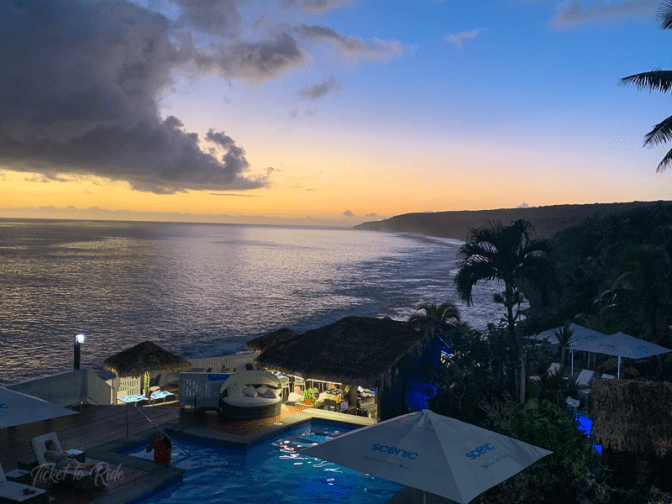
While driving around Niue, we came across the Matavai Resort. The resort was well maintained, had two swimming pools and a restaurant. We decided it would be fun to spend a couple of nights at the Matavai Resort and enjoy two luxuries we rarely use on TTR: unlimited shower water and air conditioning! I think the last time Frank and I left our boat to stay in a resort was way back in 2015 when we were in Puerto Rico taking care of boat projects on Let It Be.
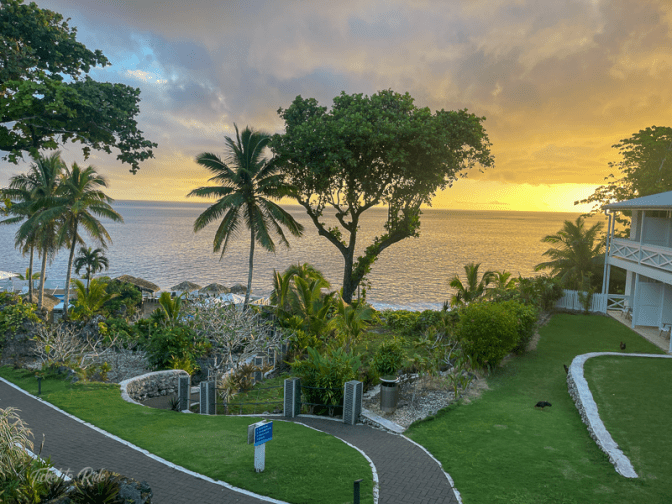
Matavai was really comfortable and we thoroughly enjoyed having a drink by the pool before having dinner at the restaurant. While we spent the daytime exploring, we did return to the resort relatively early in the day to enjoy the AC and the simplicity of “land life” for a few days.
Another interesting stop was Togo Chasm. The sign indicated it was a 45 minute walk to the chasm through an ancient coastal forest which then opened into rock pinnacles. Although the day was very warm, the walk was beautiful and worth the effort to get to Togo Chasm. The sharp rock pinnacles somehow reminded me of the HooDoos in Bryce Canyon, though these were a flat gray and small rather than a brilliant orange/yellow and huge. I’m not sure why my mind made the association, really.
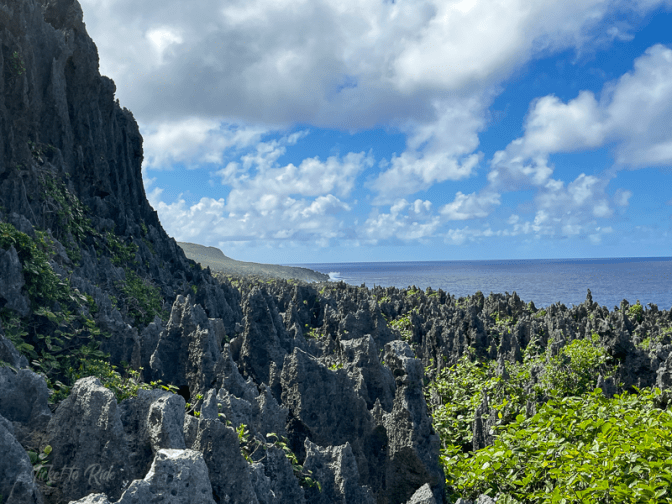
After meandering through the greenery, we followed the path through the pinnacles which led to the chasm. Initially it looked like we were descending into a dry cavern but soon you can hear water crashing nearby.

In the chasm, we turned left and after climbing over some rocks and through a little water, we found ourselves in a rock strewn tunnel area that led to the sea.
Even though we live on the ocean, the ebb and flow of the water across and out of the rocks still fascinates us and makes us pause to watch the power and beauty of the sea.
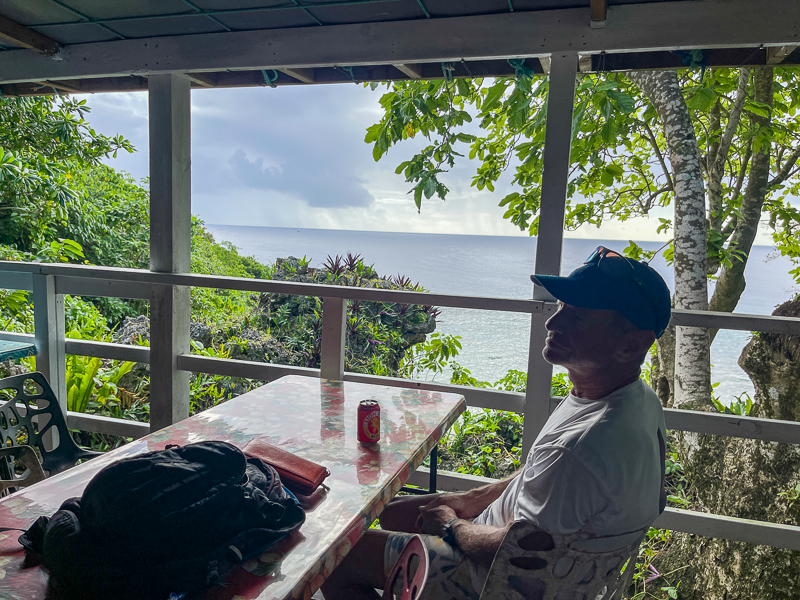
All our exploring required sustenance so we stopped at a local spot. Sadly food was not being served, but refreshments and the view were great.

Another really interesting spot we visited was the Anapala Chasm. We walked a long, verdant path that ended at a wall of rock with a very steep set of stairs leading down into a freshwater chasm. Originally this water was used for cleaning, bathing and drinking water. Trust me, this would be quite the trek to get fresh water!
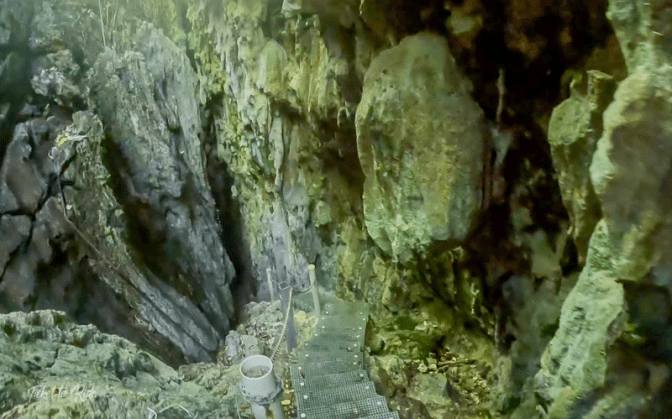
Once we descended the stairs, we came to a narrow stripe of water that led into complete darkness. Intrepid travelers that we are, we put on our masks and snorkels and swam into the water. We could see a pinhole of light at the far end and we swam toward it. At the end was a wall of rocks with an opening at the top.
I have no idea what, if anything, swam in the waters with us and I did not feel anything brush up against me, so all was well. I filmed under water with the GoPro and did not see anything swimming.
I’ve included this video, not for it’s quality, but to show you how dark it was when we entered the very chilly water. Thankfully just a moment after we entered the water we could begin to see the light at the far end of the chasm.
I imagine it was quite a treat to drink this very cold water, especially when you think about the days before refrigeration and ice. Still, I am happy we have reverse osmosis water on Ticket to Ride and don’t have to hike down to this pool for our fresh water!
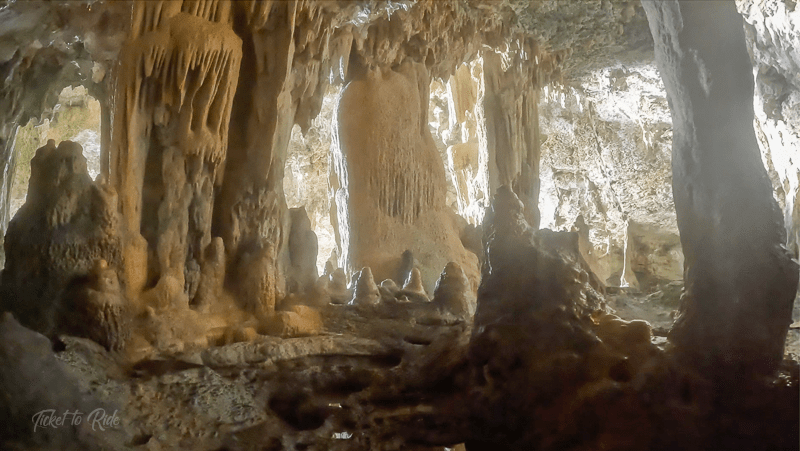
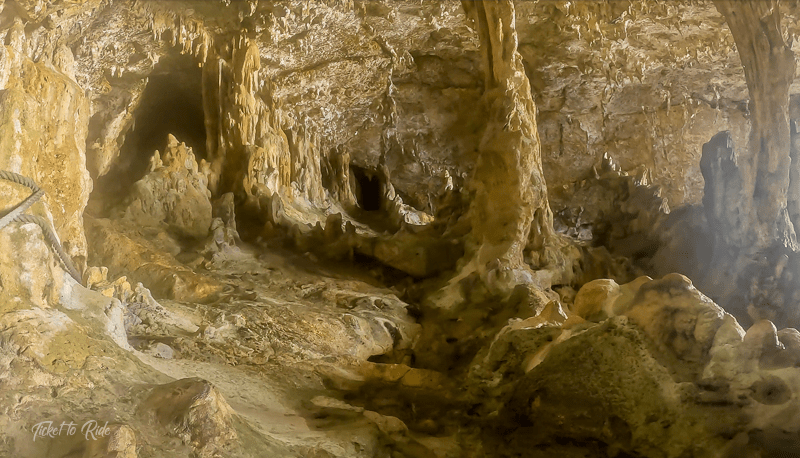
Palaha Cave was another fun stop where we followed a jungled trail out toward a cave entrance toward the ocean. However, this cave looked so different from the others because it was full of stalactites and stalagmites! It was really interesting to see these formations inside a cool cave that also opened into the sea. I am more familiar with caves like this deep in the ground of Missouri or Texas. This one was large and we were careful about where we walked to avoid damaging things and because it was slippery.
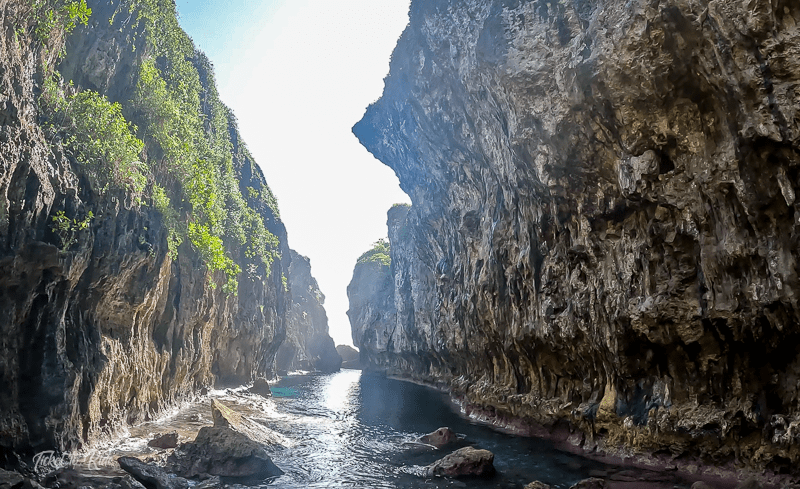
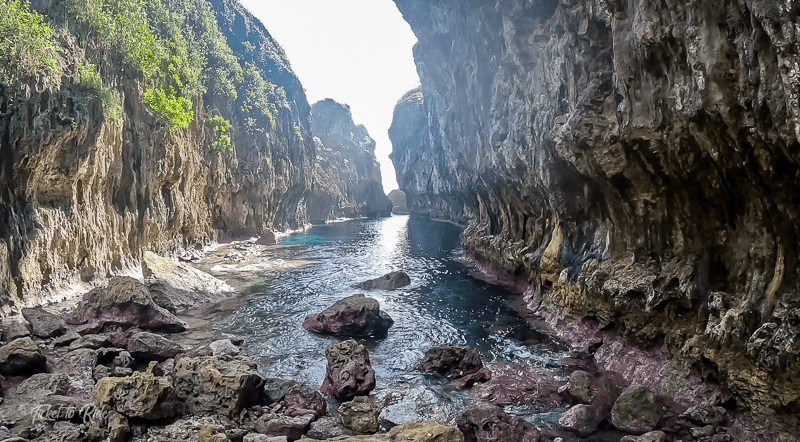
We also visited Matapa Chasm which is said to have been the bathing pool reserved exclusively for Niuean royalty. This pool has tall, vertical sides, with clear water that is less than 20’ deep. It contains saltwater but fresh water seeps down the walls and creates a shimmering layer in the water.
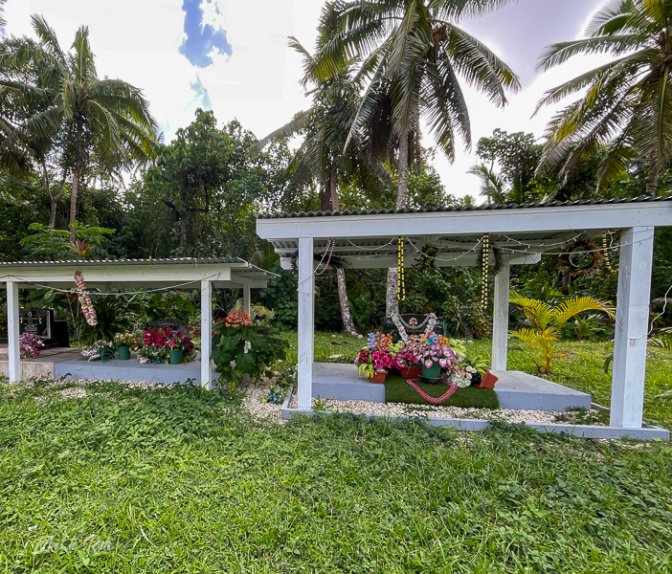
Similar to other Pacific islands, the burial grounds on Niue were well tended. Many are very close to the homes of living relatives who keep the graves laid with gorgeous flowers. My impression is that the deceased play a large role in the lives of islanders. They are buried nearby and seem to remain almost a part of the family. Maintaining the burial sites nearby is said to be a way to remain connected to the deceased.
Niue has strict limitations for visiting sailors. When we visited Niue, sailors could lease one of the 16 mooring balls available through the Niue Yacht Club for $30 per night. Because Niue is far from another safe harbor, it is necessary to make a mooring ball reservation before setting sail for the island. I would have been severely disappointed if we had sailed all the way to Niue and been unable to stay because we didn’t have a reservation or the weather turned to the west! Boats are allowed to stay in Niue for only 7 days on mooring balls in one area and anchoring is not allowed. Fortunately we asked for an extension and were allowed to stay 10 days on a mooring in Niue.
These restrictions, and especially the unpredictability of the weather, make visiting Niue a little risky, but we were fortunate to have excellent weather and a very fun stay. Even though we had heard good things about Niue, we were surprised by the variety and beauty of the scenery on the atoll.
Have you heard of Niue before this blog? Does this information or do the pictures make you want to visit Niue?
Thanks so much for stopping by to read our blog. If you would like to hear from us more often, please visit us on Facebook or Instagram. We hope your days are filled with good health and fun adventures.

 Ticket to Ride
Fun read, MG. Hard to take it all in!
LikeLiked by 1 person
Thanks, Pat. We covered a lot of ground quickly.
LikeLike
What a trip down memory lane! We loved Nuie.
Amy OutChasingStars.com
LikeLike
What an amazing place! We stopped at one of the Cook Islands that was only a park, but it was small and no one lived there. Enjoy your stay!
LikeLike
Niue was really fun and beautiful. I’m sure your stay in the Cooks was too.
LikeLike