
We left Niue on May 25, 2024 and set our course for Tonga which was about 320 nautical miles away. The sail to Tonga was uneventful although rain greeted us as we approached our first Tonga anchorage.
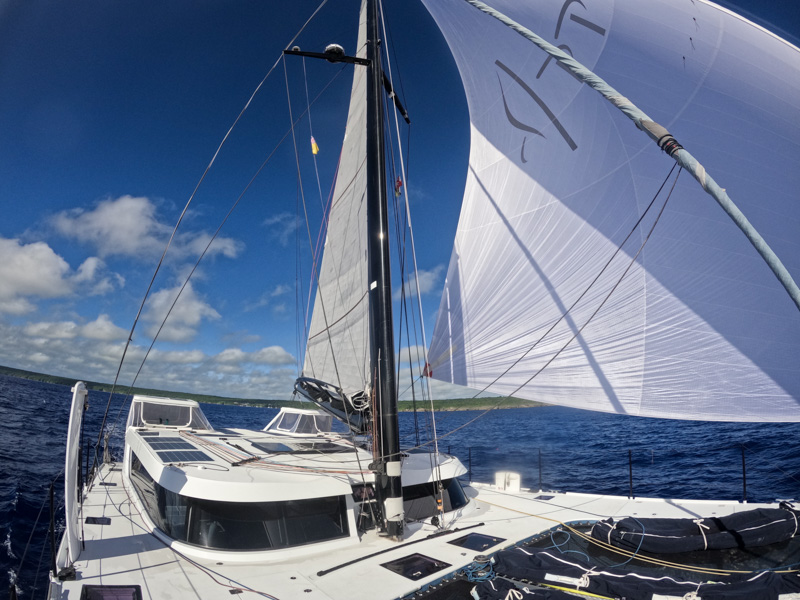
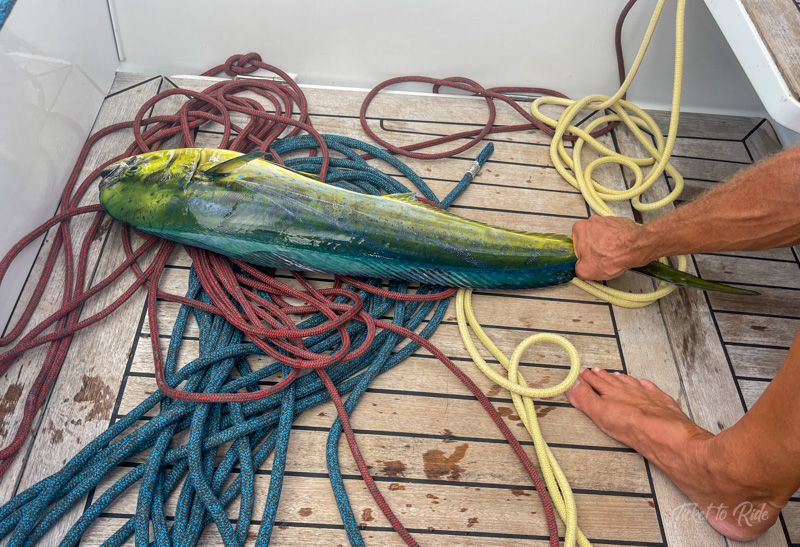
Before leaving French Polynesia, we joined The Pacific Rally, headed up by the tireless Viki Moore. The Rally travels mostly between New Zealand, Tonga and Fiji. Frank and I thought this would be a good way to meet some other cruisers, so the first anchorage in Tonga was chosen to allow us to meet up with some of the others in the rally.
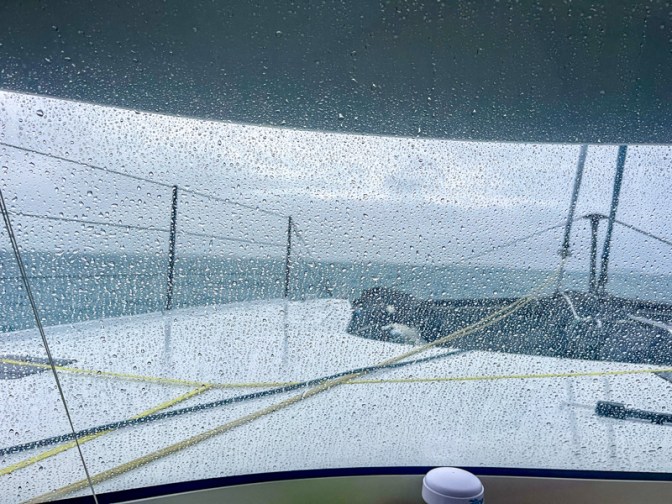
Once the rain abated some, we threaded our way into Tongatapu and dropped anchor near the main town, Nuku’alofa, where we would officially enter the country. It was too late in the day to check in, so we stayed on board until morning, then went to town and checked into the Kingdom of Tonga.
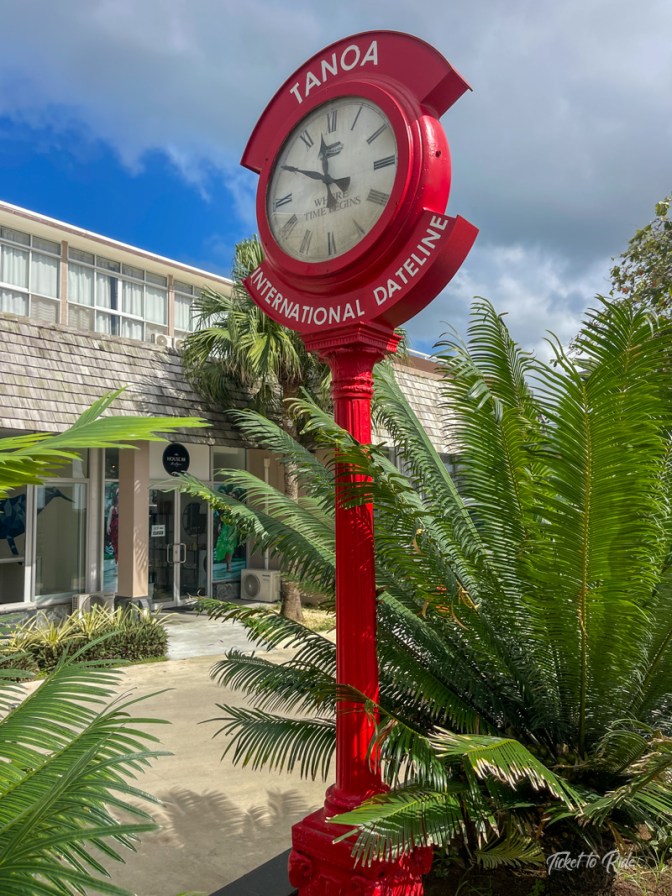
One interesting thing about our sail to Tonga is that we crossed the international date line. This meant that it looks like this short sail took us a day longer than it actually did. This also meant we had traveled far enough from home that we were no longer on the same day as our family back in the U.S. That is pretty strange!
Tonga is an interesting place. The people were very nice and in fact, in Tonga, it is considered bad form to loose your temper. A calm demeanor is highly valued and raising your voice in public is looked down upon. Sounds like an attitude that would benefit many people and places.
Although Frank and I have visited many counties, Tongatapu, Tonga felt like the most third world country we visited. I don’t know how to explain that feeling since there were many structures and probably other places we visited were more poor or less developed; it was just a “feeling” about the places we saw in Tonga, especially our first stop.
Don’t misunderstand me, the people were lovely, but our impression from the housing, the groceries, the general development and the disrepair of many places, Tongatapu seemed the poorest. Although there was some infrastructure, areas had a feeling of dilapidation. Yet, the locals seem happy, so I shouldn’t impose my standards on their experience.
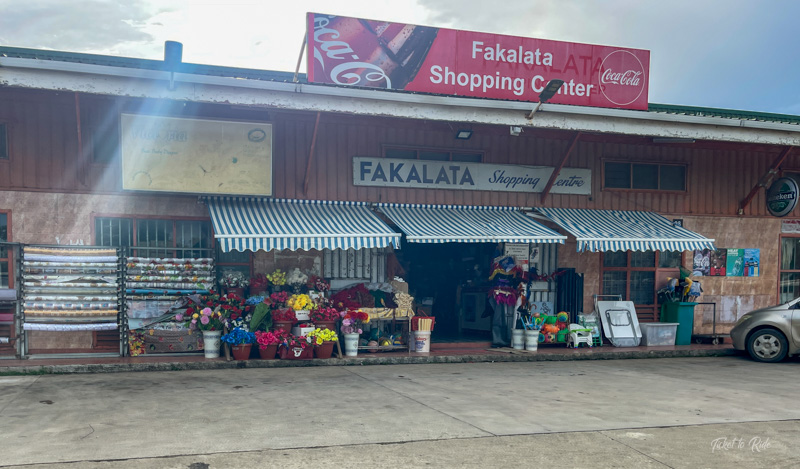
A local taxi driver gave us a tour of the island and he told us that in recent years, drugs have become an issue in Tonga, especially affecting the young men. This translates into problems filling jobs at the docks and causes some disruption with supplies. This factor alone may have contributed to our impression of the lifestyle on the main island of Tonga.
The tour we received was definitely not a formalized one and consisted of the driver showing us things he thought would be of interest.
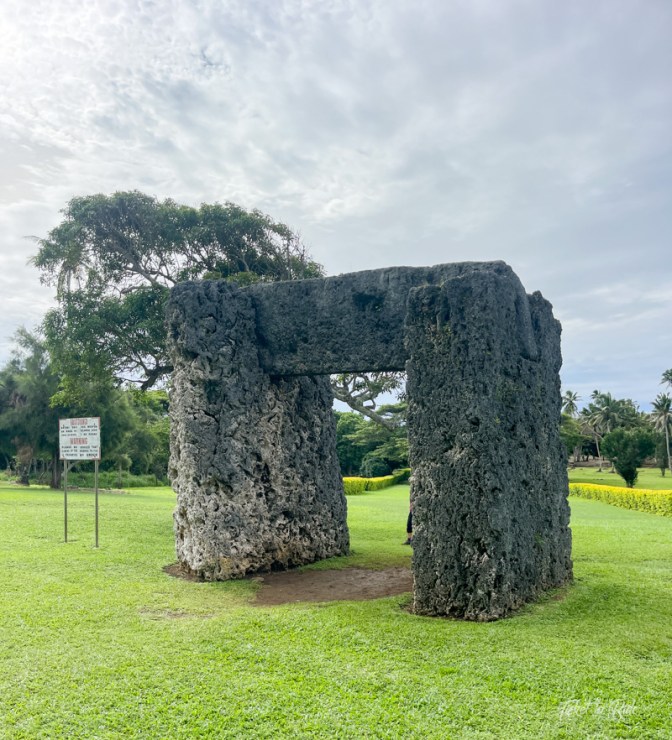
Ha’amonga ‘a Maui is a trilithon, which simply means a stone structure with two vertical stones that act as posts for a third horizontal stone across the top. Sometimes called “The Stonehenge of the Pacific,” the structure was built around 1200AD by king Tuʻitātui to honor his two sons. The name of the trilithon translates roughly to “the burden of Maui.” In Polynesian mythology, Maui was a prominent cultural hero.
Ha’amonga ‘a Maui is about 17′ high and 19’ wide and each stone is estimated to weigh between 30 and 40 tons! Originally people thought this was used as a gateway to some type of royal palace or grounds, but in 1967, King Taufa’ahau Tupou IV suggested that the notch carved in the top lintel had some significance to the lunar calendar and served as a guide for the beginning of a New Year. In the months following King Tupou IV’s suggestion, surveyors found that when the sun rose on the shortest day of the year, the bearing taken matched perfectly with the one of the Tropic of Cancer and the other to the Tropic of Capricorn. Which means that the two points do actually mark the positions of the rising sun on the shortest and longest days of the year! Wow!
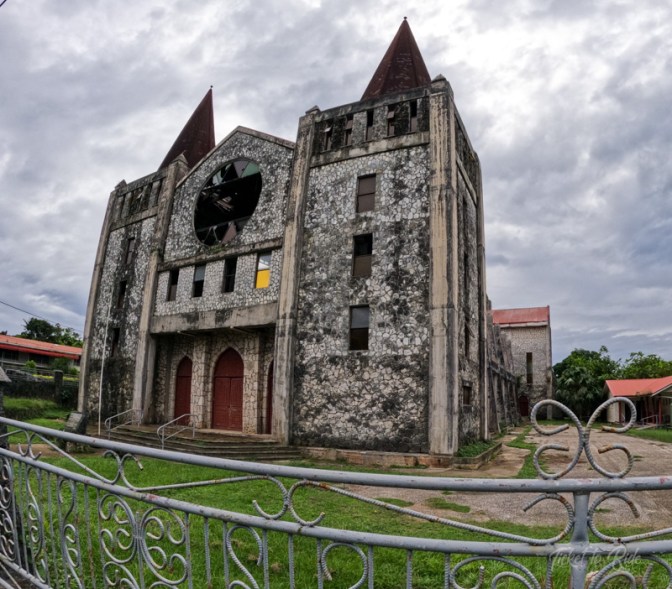
This church was founded by King Siaosi Tupou I on January 6, 1885 . The Free Church of Tonga was gradually destroyed by decay and natural disasters, especially cyclone Gita in 2018 and the 2022 Hunga Tonga-Hunga Ha’apai volcanic eruption and tsunami.
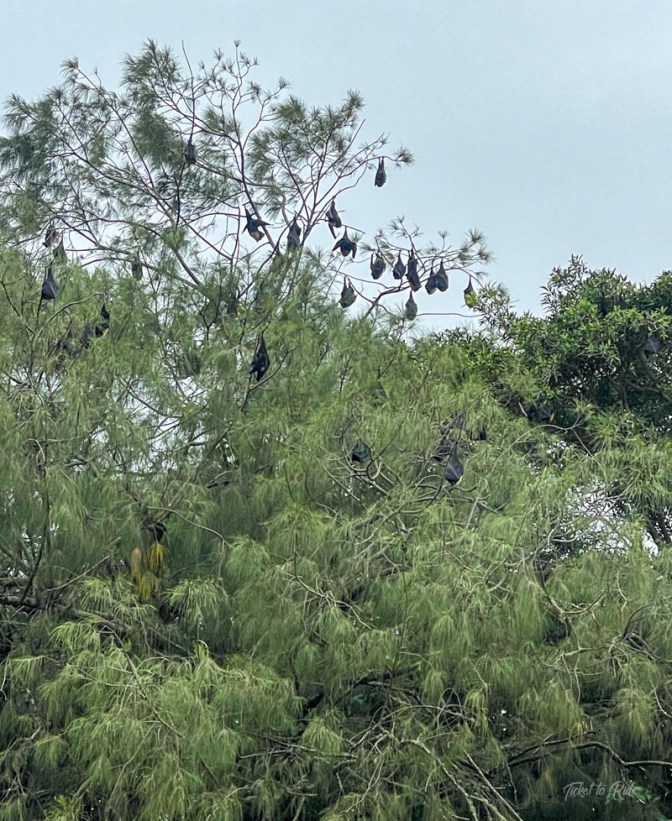
This photo does not do justice to the fruit bats in Tongatapu. There were a LOT of them and they were busy during the day, which surprised me because I think of bats as nocturnal creatures.
The legend of flying foxes in Tonga is that two bats were gifted to the Tongan monarchy by a Samoan princess. One of the bats was white and the other one was black. At one time, the bat population was declining, but they are now considered the property of the king and sacred property, which means no one can hunt or harm them. This rule has allowed the fruit bats to repopulate.
Legend has it that a white bat appears during royal occasions, which adds to the fact that bats are considered a powerful symbol of the monarchy and are used as motifs in traditional art of Tonga.
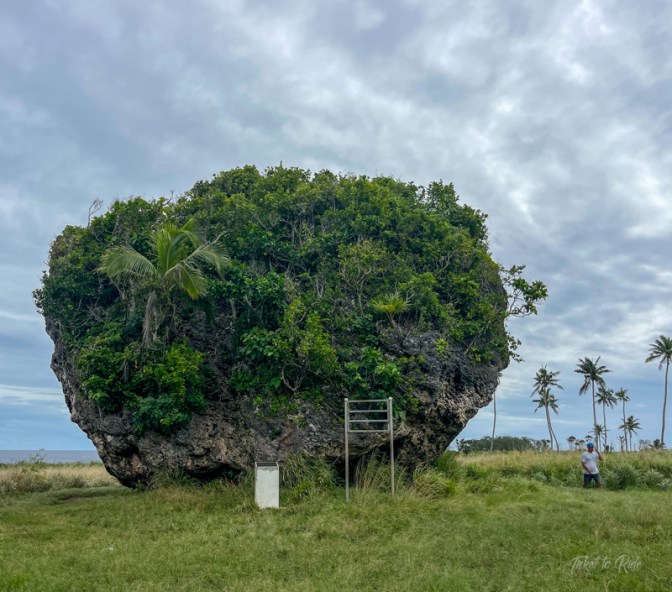
So remember that cultural hero, Maui? Well legend has it that a giant, magical rooster was disturbing the people of Tongatapu. So one day, the demigod Maui decided to grab giant boulders from the nearby island of Eau and he threw several giant bolder at the rooster. This is one of the largest Maui threw and it symbolizes the strength and power of Maui and thereby the Tongans.
Of course, geologists say that these large coral and limestone rocks were moved on waves of tsunamis, probably triggered by volcanoes.
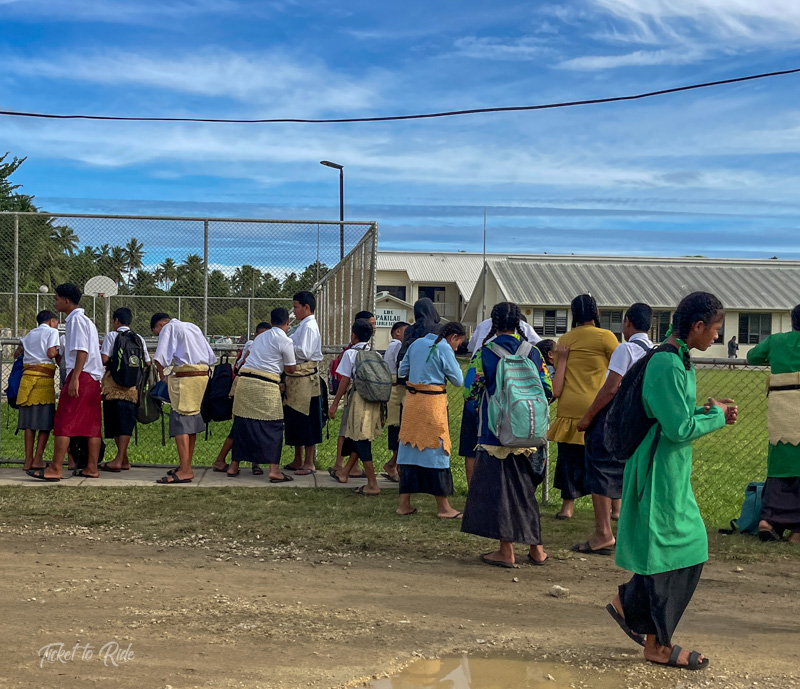
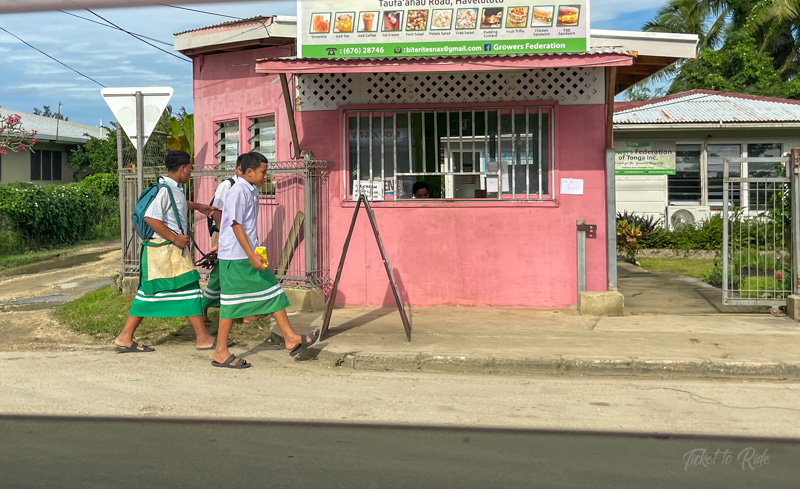
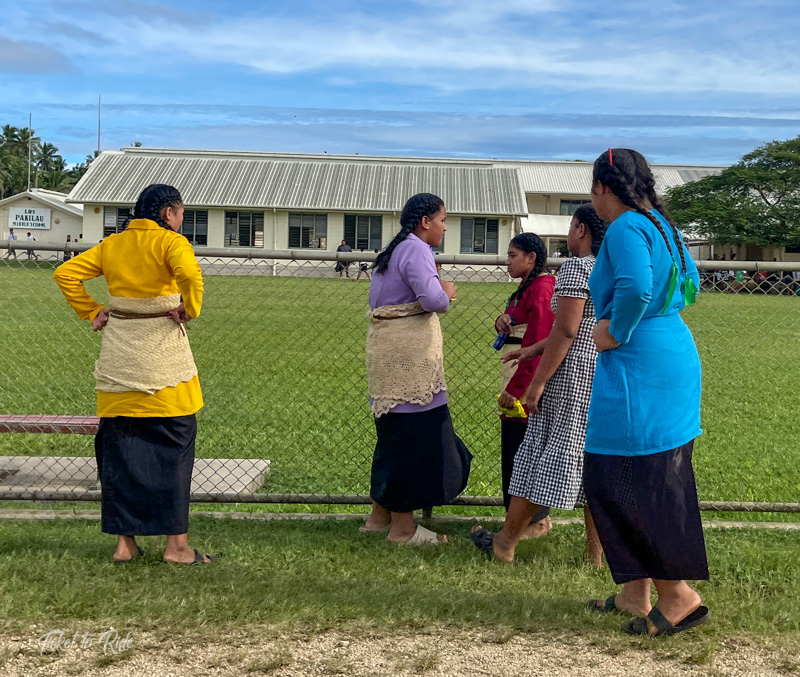
Traditional attire for Tongan men includes tupenus or skirts that reach to the knees or longer. On top of this they have a Ta’ovala tied around the waist. The Ta’ovala is a woven wrap made from hibiscus plants or pandanus plants. These are paired with a colored shirt and sandals which are also called “slippers.”
The women in Tonga dress with modesty, wearing a dress, sometimes with a tupenu, skirt, underneath it to cover their legs and ankles. Women also wear a ta’ovala around their waist, thought theirs might be woven or crocheted.
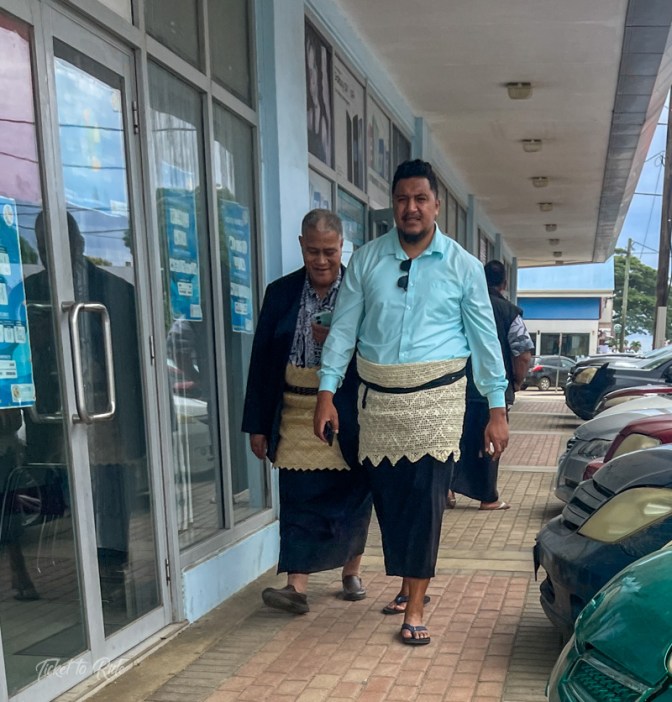
My understanding is that ta’ovalas are considered to add modesty and to show respect for the royalty. I have also read that ta’ovalas have been passed down are considered more formal and valuable.
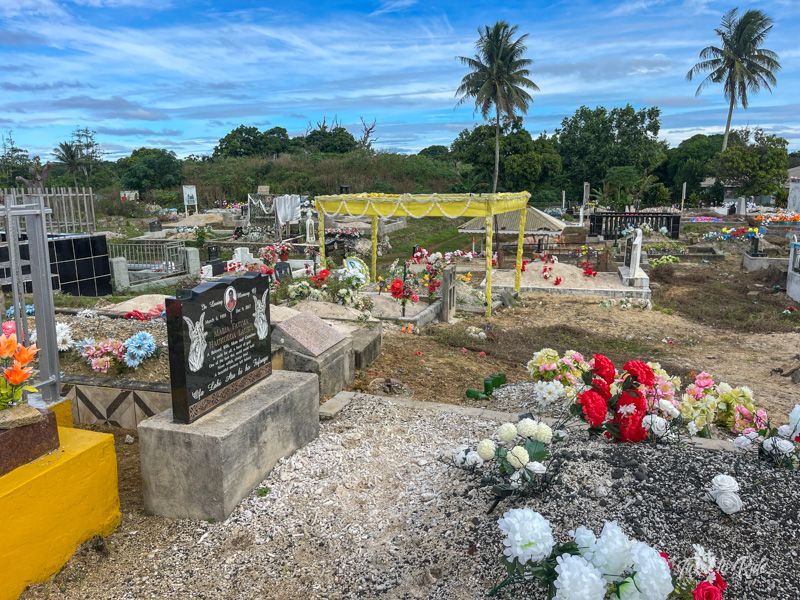
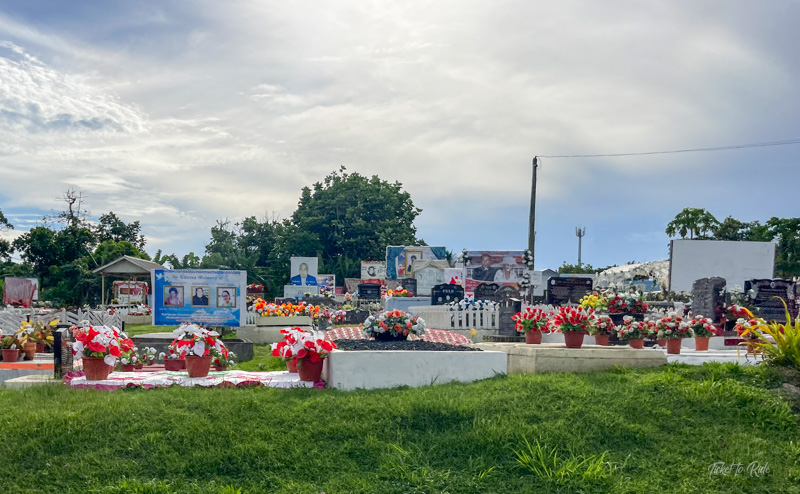
It seems like no South Pacific island post is complete unless it includes the burial grounds. Here in Nuku’alufa, we again saw the honor and care focused on deceased family and friends. The graveyards were numerous and colorful, but unlike Niue, in Tonga the graves were in large areas rather than alongside the family home.
One of our most surprising finds was a coffee shop named Tupu’anga. It was brand new and beautiful inside! In fact it made me wish I was a coffee drinker.
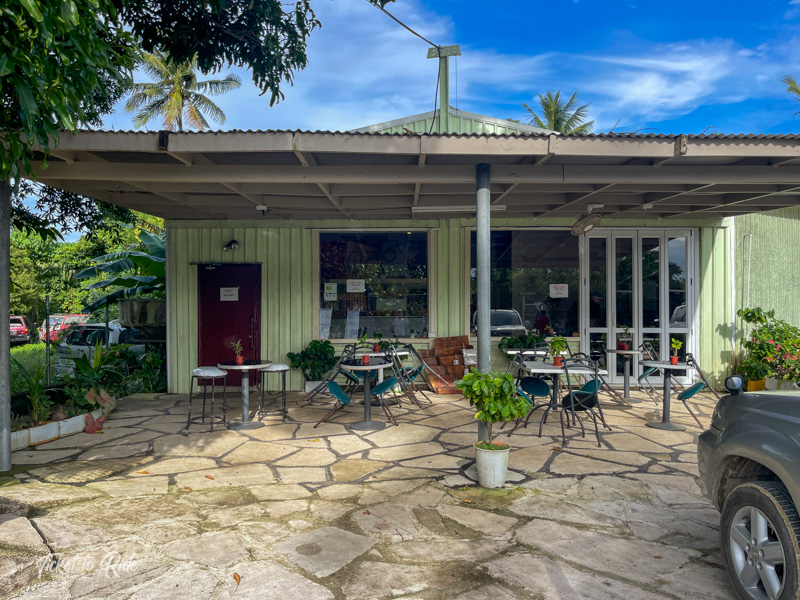
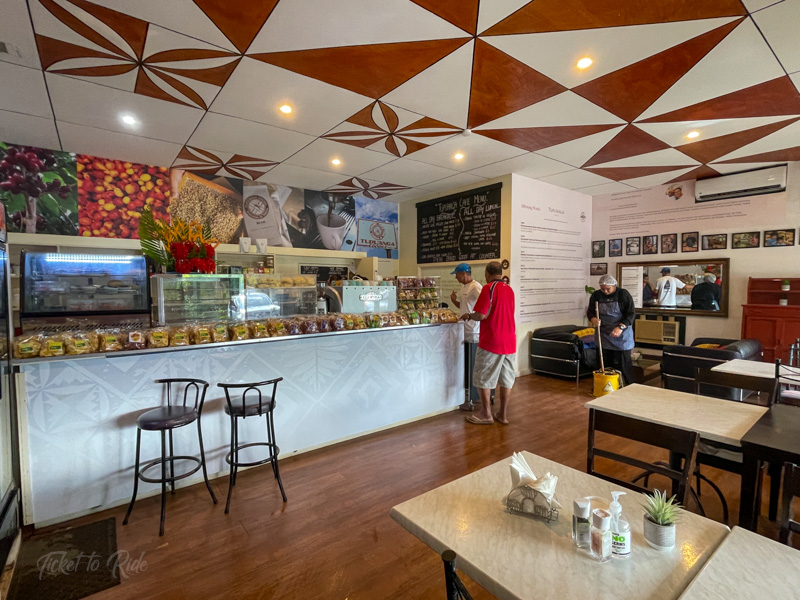
It was late afternoon when our driver stoped at this coffee shop, so Frank didn’t drink any coffee then. However, he bought coffee beans for himself and our driver, which seemed like a big luxury for our driver. Frank said the coffee excellent.
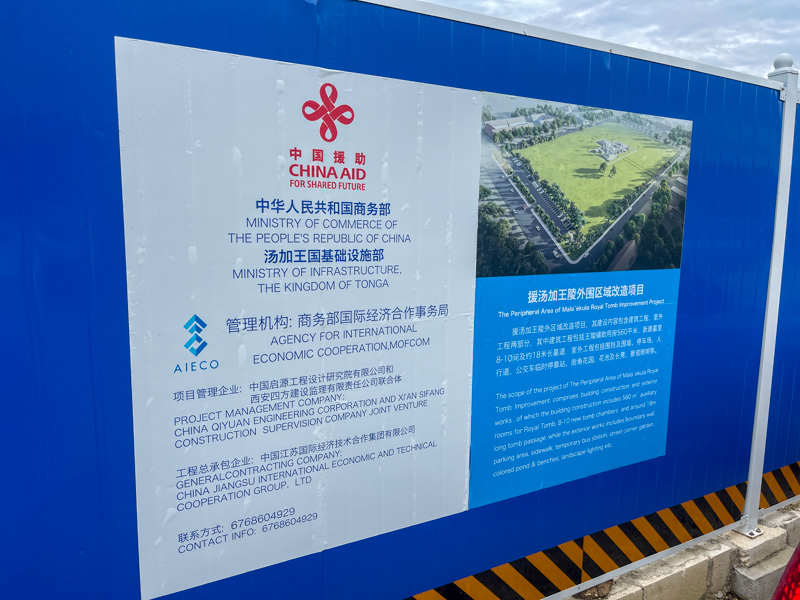
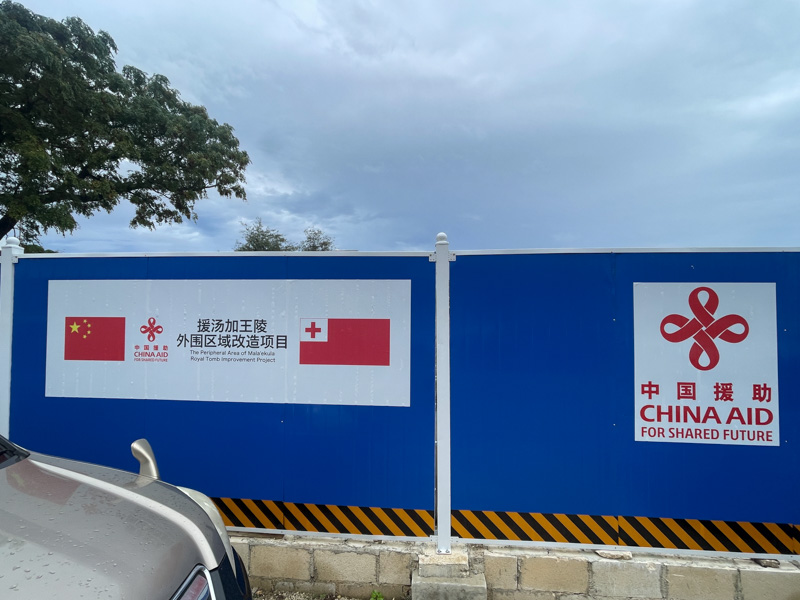
One very interesting thing we noticed in our travels in the South Pacific was “China Aid.” In many countries, China has a presence as a benevolent helpers to the countries. We saw evidence of this in French Polynesia, Niue and Tonga, so far. We could go down a whole rabbit hole of research about what was actually “given” by the Chinese government to these countries and what was “expected” in return. But who wants to read about politics in a sailing blog?!
We did hear a second hand story about a Chinese man working in Niue who was sentenced to 30 years of prison because his family has a second child. Even though that law no longer exists in China, the man must still complete his sentence. He was building roads in Niue and had another 5 years to complete! So sad for him and his family.
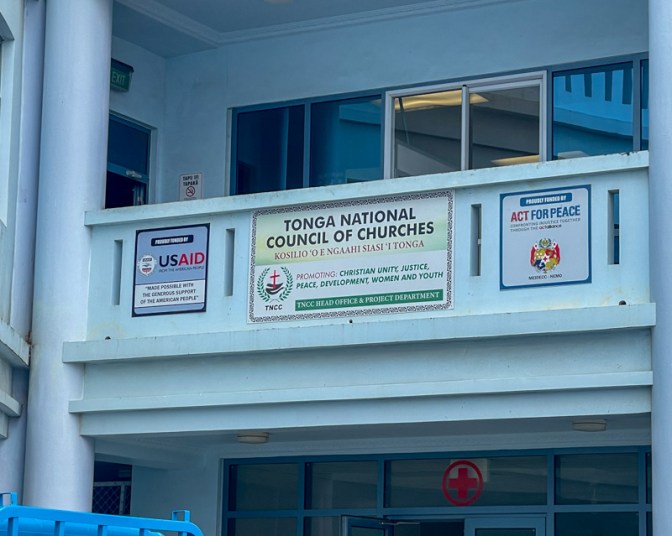
In comparison, we saw very little evidence of US Aid, but I may have missed it.
As always when living on a boat, we stayed on top of the weather. We had been in Tongatapu only a couple of days when we saw the forecast for some westerly winds that were predicted to last for more than a week. Based on the weather, we had to make a decision to either stay in Tongatapu to wait out the westerly wind direction or head out immediately, make quick and strategic stops in the Ha’apai Island group, then cruise on into the Vava’u Islands where protection from westerly winds was easier to find. We only had a 31 day visa for Tonga, so time was sparse.
Per our usual, we chose to up anchor and head out…. because Ticket To Ride loves to sail and Frank and Mary Grace enjoy less populated anchorages rather than those with a lot of traffic.
Thanks so much for stopping by to read our blog. I am trying to catch up with our travels through Fiji, so thank you for your patience. If you would like to see other pictures from our travels, please visit us on Facebook or Instagram. We hope your days are filled with good health and fun adventures.

 Ticket to Ride
Thanks for the updates. When I tried to save my comments, it told me I had to change my password. Not sure if it worked.
We enjoyed our visit to a few of the Tonga Islands back in 2018. It was a wonderful country and lots to see.
Keep enjoying your travels.
Love, Mark & Helen Humphreys
LikeLiked by 1 person
We especially enjoyed the Tongan people! Thanks for checking in!
LikeLike
Such an interesting read! I am looking forward to your next blog!!
LikeLiked by 1 person
Thank you! I’ll definitely take that as a compliment from you, Nancy.
LikeLike
Great blog – really enjoyed the longer form and photos! FYI, President Trump ended USAID in the first week of his administration which may have had an impact, as it will in many other lesser developed countries. Be well and early Happy New Year / Tim – Malolo
LikeLiked by 1 person
Thank you for your comment, Tim. Yes, I am aware that President Trump ended USAID. We were in these countries prior to his second term, so USAID was still funded at that time…. I have mixed thoughts about if aid packages from various countries are truly “humanitarian” or “in return for.” But that is above my pay grade. 🙂 I hope you are feeling well Tim. Happy and healthy Holidays.
LikeLike